Long workdays, meetings, deadlines, commuting, family responsibilities, and unexpected tasks can make exercise feel impossible to fit into the week. Many professionals know that regular activity would improve their health and energy, yet getting to a gym several times a week can become another appointment competing for limited time. Fitness for busy professionals works best when the routine removes unnecessary barriers instead of adding more tasks to an already demanding schedule.
That is where in-home personal training can make a significant difference. Instead of travelling to a gym, waiting for equipment, and reorganizing your day around a facility, a trainer comes to your home, condo, or suitable private training space. At Triat Fitness, we help make fitness for busy professionals more practical through structured coaching that fits into real schedules. With a clear plan, professional accountability, and personalized workouts, exercise can become part of your week rather than something that repeatedly gets postponed.
Why Busy Professionals Struggle To Stay Consistent With Fitness
Fitness for busy professionals is challenging because time is rarely the only problem. Decision fatigue, unpredictable work hours, commuting, stress, and low energy can all interfere with exercise. You might plan to visit the gym after work but receive a late meeting invitation. You might intend to train before work but stay up answering emails. When every workout requires packing a bag, travelling, parking, changing, exercising, showering, and commuting again, a 45-minute workout can easily consume much more than 45 minutes.
Another challenge with fitness for busy professionals is relying too heavily on motivation. Motivation naturally changes from day to day, particularly when work becomes stressful. Successful routines depend more on structure than enthusiasm. A scheduled in-home training session creates a fixed commitment and removes several decisions from your day. Your trainer arrives with the workout planned, which means you only need to be ready to participate rather than figuring out where, when, and how to exercise.
Convenience Can Turn Good Intentions Into Action
Fitness for busy professionals becomes easier when the gap between deciding to exercise and actually starting the workout is small. If your training space is inside your home or condo, you may be able to finish work and begin exercising within minutes. Removing travel time can make a morning, lunch-hour, or evening session much more realistic.
What Is In-Home Personal Training?
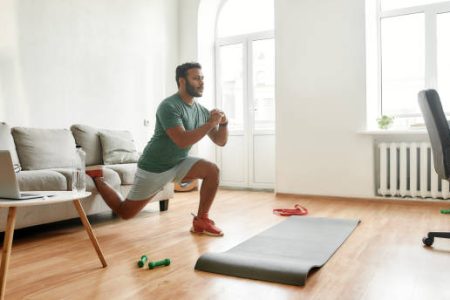
In-home personal training means working with a professional trainer in your home, condo fitness room, apartment gym, or another appropriate private space. The trainer builds your program around your goals, current ability, schedule, and available equipment. Fitness for busy professionals does not require a large home gym because many effective workouts can be performed with dumbbells, resistance bands, bodyweight exercises, benches, mats, cable machines, or equipment already available in a condo gym.
The major advantage is that the coaching comes to you. For someone managing a demanding career, removing the commute can significantly simplify fitness for busy professionals. Sessions may focus on strength, mobility, conditioning, posture, core stability, or general fitness depending on individual needs. Instead of trying random workouts from social media whenever time becomes available, you have a structured program and a trainer who knows what you completed previously and what should come next.
Personal Training Can Fit The Space You Already Have
You do not need to redesign your home around fitness. A trainer can assess the space and select exercises accordingly. Even a modest amount of open floor space can support squats, lunges, hinges, presses, rows, core exercises, mobility work, and conditioning. If you have access to a condo gym, the equipment available there can provide even more options.
How In-Home Training Saves More Than Workout Time
The biggest advantage of in-home training for fitness for busy professionals is often the time saved before and after the actual session. Consider a traditional gym visit. You may spend 20 to 30 minutes travelling each way, plus additional time parking, changing, waiting for equipment, and getting organized. A one-hour workout can easily become a two-hour block in your calendar. For someone with a demanding schedule, that extra time can determine whether exercise happens consistently.
With in-home coaching, much of that additional time disappears. Fitness for busy professionals can become a 45-minute or 60-minute appointment rather than a multi-hour commitment. That efficiency makes it easier to schedule sessions between meetings, before the workday begins, or immediately after logging off. Saving even an hour around each workout can add up over several weekly sessions, leaving more time for work, family, recovery, or other priorities.
Time Efficiency Can Improve Long-Term Consistency
The best workout is not necessarily the longest. A professionally structured 45-minute session that happens every week may be more valuable than a two-hour gym routine that keeps getting cancelled. Fitness for busy professionals should prioritize repeatability because results depend on what you can maintain over months, not what you can complete during one unusually quiet week.
Build Fitness Around Your Calendar Instead Of Fighting It
Fitness for busy professionals should begin with the calendar you actually have. Instead of choosing an ideal workout schedule and hoping work accommodates it, identify the times that are most predictable. Some professionals have more control early in the morning, while others have reliable lunch breaks or evenings. Blocking those periods as recurring appointments can prevent exercise from continually being pushed aside by less important tasks.
Your training plan should also include a backup option. Fitness for busy professionals becomes more sustainable when there is a normal-week plan and a busy-week plan. For example, your usual routine might include three 45-minute sessions, while an exceptionally demanding week might include two 30-minute workouts plus walking. Reducing the plan temporarily is often better than abandoning it completely. A trainer can help you decide what to prioritize when time becomes limited.
Treat Your Workout Like An Important Meeting
Professionals rarely cancel important client meetings simply because they do not feel motivated that day. Using the same mindset with training can help. Schedule the session, protect the time, and prepare for it in advance. Once exercise becomes a calendar commitment rather than an optional activity, consistency often improves.
Simple Ways To Make Exercise Fit A Busy Workweek
Fitness for busy professionals does not require completely changing your lifestyle overnight. Small improvements in scheduling and preparation can remove many of the obstacles that cause workouts to disappear during stressful weeks. Preparing your training space, keeping equipment accessible, and choosing realistic session lengths can make starting easier.
It is also useful to reduce the number of decisions you make around exercise. Fitness for busy professionals works better when you already know what days you train, what time sessions happen, and what the minimum plan is when work becomes hectic. Consider these practical strategies:
- Schedule workouts on your calendar before the week begins
- Train at home to remove commuting time
- Keep workout clothing ready and easily accessible
- Choose two or three dependable weekly training windows
- Use shorter sessions when your schedule becomes unusually busy
- Walk during phone calls when practical
- Take movement breaks between long meetings
- Use stairs when convenient
- Keep basic fitness equipment in an accessible location
- Schedule a trainer for additional accountability
- Create a minimum workout for extremely busy days
- Avoid trying to make every session perfect
How Short Workouts Can Still Produce Meaningful Progress
Some people assume fitness for busy professionals requires one-hour workouts five or six days per week. That is not necessarily the case. A well-designed program can prioritize major movement patterns and use time-efficient structures such as paired exercises or full-body sessions. A 30 to 45-minute strength workout can include squatting, hinging, pushing, pulling, core training, and conditioning without unnecessary downtime.
Workout quality matters more than filling time. Fitness for busy professionals should focus on exercises that provide a strong return for the available time. Full-body strength sessions can be particularly practical because they allow you to train major muscle groups several times per week without requiring a complicated bodybuilding-style schedule. Your trainer can also adjust rest periods and exercise pairings so sessions remain efficient without sacrificing technique.
Full-Body Training Can Work Well For Tight Schedules
When you have only two or three weekly training opportunities, full-body workouts can make each session productive. Instead of dedicating an entire day to one body part, you can train several major movement patterns in each workout and maintain a simpler weekly schedule.
Why Strength Training Deserves A Place In A Professional’s Routine
Fitness for busy professionals should include resistance training because strength supports everyday movement and general physical capacity. Long periods of desk work can mean spending much of the day sitting, so structured exercise provides an opportunity to move through different ranges, train major muscle groups, and challenge the body in ways office work does not. Dumbbells, resistance bands, cable machines, and bodyweight movements can all be used effectively.
Current Government of Canada guidance recommends that adults aged 18 to 64 work toward at least 150 minutes of moderate-to-vigorous activity per week, along with light activity and muscle- and bone-strengthening activities. The guidance also specifically suggests building movement into the workday through strategies such as active breaks, stretching, walking meetings, and taking stairs when possible. Fitness for busy professionals can combine these daily movement habits with structured strength sessions for a more complete routine.
You Do Not Need To Reach Every Recommendation Immediately
If you currently exercise very little, trying to transform your entire schedule at once may be unrealistic. Start with the amount of activity you can maintain and gradually build from there. The Government of Canada notes that movement counts and that progress toward recommended activity levels can still provide health benefits. A sustainable beginning is more useful than an ambitious schedule you cannot maintain.
Managing Long Hours Of Sitting
Fitness for busy professionals is not only about scheduled workouts. Many office professionals spend long periods seated during meetings, computer work, commuting, and evening screen time. Even when you complete a workout, finding additional opportunities to move throughout the day can support a more active lifestyle. Standing during certain calls, walking briefly between meetings, or taking a short movement break can help interrupt long periods of sitting.
These habits do not need to become additional workouts. Fitness for busy professionals becomes more manageable when movement is built into things you are already doing. A five-minute walk between meetings, taking stairs, or standing while reading a document requires less planning than another formal exercise session. Small amounts of movement throughout the workday can complement your coached workouts and make activity feel like a normal part of your routine.
Use Work Transitions As Movement Reminders
Instead of relying on random reminders, connect movement with events that already happen. Stand up after every meeting, walk before lunch, stretch after finishing a major task, or take a short walk when your workday ends. These cues can turn movement into an automatic habit.
How Personal Training Removes Decision Fatigue
Decision fatigue can be a major obstacle to fitness for busy professionals. After spending all day making work decisions, choosing exercises, repetitions, weights, and workout structure may feel unnecessarily difficult. This is one reason people arrive at the gym and spend more time thinking about what to do than actually training. A personal trainer removes much of that uncertainty by preparing the program in advance.
With 1-on-1 In-Home Personal Training, the session is built around your current ability, goals, available space, and previous performance. Fitness for busy professionals becomes simpler because someone else manages the programming while you focus on completing the exercises. Your trainer can track weights, repetitions, technique, and progression so each session connects logically with the previous one.
Professional Structure Helps Make Limited Time More Productive
When you only have 45 minutes, you do not want to spend 15 minutes deciding what exercise comes next. A trainer can organize the session so transitions are efficient and every exercise supports the goals of the program.
Accountability Matters When Work Becomes Stressful
Fitness for busy professionals is often easiest when work is calm and hardest when exercise is needed most. Busy projects, deadlines, and travel can quickly disrupt routines. Without accountability, missing one workout can turn into missing an entire week. Scheduled personal training creates another layer of commitment because someone is expecting you at a specific time.
Accountability does not mean feeling guilty for legitimate schedule changes. Instead, fitness for busy professionals should include flexibility and a method for getting back on track quickly. If a meeting unexpectedly replaces your normal training window, your trainer can help identify another option or modify the week’s plan. The goal is not perfection. It is preventing one difficult day from becoming several inactive weeks.
Consistency Should Be Flexible, Not Fragile
A routine that works only when every day goes according to plan is not realistic for a busy professional. Build a system that can survive travel, deadlines, family commitments, and demanding work periods. Flexibility helps protect long-term consistency.
Partner Training Can Make Fitness More Social And Affordable
Fitness for busy professionals does not always need to be a solo activity. Partner In-Home Training (2-on-1) allows two people to work with a trainer together. This may be especially convenient for couples with demanding careers, colleagues who live nearby, or friends who want to make fitness a shared commitment. Training together provides another form of accountability because both participants have a reason to keep the appointment.
Partner training can also help make professional coaching more accessible by sharing the trainer’s time. The workout can still be adjusted to suit each person’s ability, even when exercises are completed within the same session. For professionals who want coaching but prefer a social environment, this can be a practical middle ground between fully private sessions and larger group training.
Shared Goals Can Strengthen Accountability
You do not need identical fitness levels to train with someone else. A professional coach can change resistance, repetitions, or exercise variations for each person while keeping the overall session organized.
Small Group Training For Professionals Who Enjoy Team Energy
Small Group Personal Training can be another useful option for fitness for busy professionals who enjoy being around other people. A small group provides scheduled structure, coaching, and social motivation while allowing the cost of professional training to be distributed across several participants. For people who spend most of their workday focused on individual tasks or screens, group training can also provide a welcome social change.
Small groups can make sessions feel energetic without creating the anonymity of a large fitness class. Fitness for busy professionals still benefits from a coach who understands participants’ abilities and can provide exercise modifications. The social side can make consistency easier because training becomes an activity people look forward to rather than another obligation on the calendar.
Choose The Format That Matches Your Personality
Some professionals want quiet, private coaching after a busy workday. Others become more motivated when training with a partner or group. There is no universally best format. Choose the environment that makes you most likely to attend consistently.
Nutrition And Recovery Still Matter With A Busy Schedule
Fitness for busy professionals can become difficult when sleep, meals, hydration, and stress are consistently ignored. Training is only one part of your weekly routine, and your ability to exercise effectively can be affected by what happens outside sessions. Long workdays sometimes lead to skipped meals, heavy reliance on convenience foods, poor sleep, and irregular hydration, which may affect energy and recovery.
Canada’s Food Guide explains that healthy eating and physical activity habits can influence health and encourages people to eat well and remain active every day. Fitness for busy professionals does not require perfect nutrition. Practical habits such as planning simple meals, keeping water nearby, and protecting sleep can help support a consistent exercise routine.
Do Not Make Your Fitness Plan Another Source Of Stress
A useful health routine should support your life, not create another impossible standard. Focus on improvements you can repeat, such as scheduled workouts, regular movement, balanced meals, and better sleep habits, instead of trying to change everything at once.
How To Build A Realistic Weekly Fitness Schedule
A realistic fitness for busy professionals schedule could begin with two or three strength sessions each week. These can be combined with regular walking, brief movement breaks, and other activities you enjoy. For example, you might train with a coach Tuesday and Thursday mornings, complete a short independent session Saturday, and take walks during lunch on other days. The exact structure matters less than whether it fits consistently into your life.
Your schedule should also reflect demanding periods. Fitness for busy professionals may look different during a regular workweek than during a major project launch or business trip. Instead of abandoning exercise when work intensifies, reduce the workload temporarily. Completing two shorter sessions can maintain momentum until your schedule returns to normal. This approach turns exercise into a flexible lifestyle habit instead of an all-or-nothing project.
Plan The Minimum Before You Plan The Maximum
Before deciding how much exercise you would ideally like to do, decide what you can realistically maintain during your busiest week. That minimum becomes the foundation of the routine. You can add more activity when time and energy allow.
Why Choose Triat Fitness
Triat Fitness understands that fitness for busy professionals has to work around real responsibilities. Our approach focuses on reducing barriers through convenient coaching, personalized programming, and practical scheduling. With 1-on-1 In-Home Personal Training, you can receive professional guidance in your own home or condo environment without adding another commute to your day. Workouts are structured around your fitness level, available equipment, and goals.
Triat Fitness also offers Partner In-Home Training (2-on-1) and Small Group Personal Training for clients who prefer shared accountability. Whether you want private coaching, want to train with your partner, or enjoy the motivation of a small group, fitness for busy professionals should be built around the format that makes consistency easier. Our goal is not to add another stressful obligation to your calendar. It is to make professional training fit more naturally into the life you already have.
Make Fitness Easier To Start And Easier To Maintain
When professional coaching comes to you and the workout is already planned, fewer obstacles stand between you and consistent exercise. Triat Fitness helps clients use their available time effectively while developing strength, confidence, and sustainable fitness habits.
You Do Not Need More Time, You Need A More Practical Fitness Plan
Fitness for busy professionals does not require finding several extra hours in an already crowded week. It requires making better use of the time you already have. In-home personal training removes commuting and much of the preparation associated with traditional gym visits. Professional programming removes workout guesswork, while scheduled sessions create accountability when motivation is low or work becomes stressful.
Triat Fitness can help make fitness for busy professionals realistic through 1-on-1 In-Home Personal Training, Partner In-Home Training (2-on-1), and Small Group Personal Training. If your work schedule has repeatedly pushed exercise to the bottom of your priority list, changing the training format may be more effective than trying harder to fit a traditional gym routine into your day. Start with a schedule you can maintain, protect that time, and let professional coaching help turn fitness into a consistent part of your life.
Frequently Asked Questions
Fitness for busy professionals works best when exercise is convenient, scheduled, and realistic. You do not need to spend every evening in a gym or follow an extreme workout program. A few structured training sessions combined with regular daily movement can create a much more sustainable routine.
In-home personal training can be particularly useful when commuting and unpredictable work schedules are the main barriers. The following answers cover common questions professionals have when trying to fit exercise around demanding careers.
How Can Fitness For Busy Professionals Fit Into A Full Work Schedule?
Fitness for busy professionals can fit into demanding schedules by using fixed training appointments, shorter workouts, in-home coaching, and daily movement such as walking or active breaks.
Is In-Home Training Good For Fitness For Busy Professionals?
Yes. In-home personal training removes the commute to a gym and gives busy professionals a structured workout in their home or condo, which can save considerable time.
How Many Weekly Workouts Are Enough For Fitness For Busy Professionals?
The ideal number depends on your goals and current fitness level, but many professionals can begin with two or three structured weekly workouts plus regular movement throughout the week.
Can A 30-Minute Workout Support Fitness For Busy Professionals?
Yes. A well-planned 30-minute workout can be productive when it prioritizes important movements and minimizes unnecessary downtime.
What Equipment Is Needed For Fitness For Busy Professionals At Home?
You can train effectively with bodyweight exercises, resistance bands, dumbbells, a mat, or equipment available in a condo gym. A trainer can build the program around the equipment you already have.
Can Couples Use In-Home Training For Fitness For Busy Professionals?
Yes. Partner In-Home Training (2-on-1) can allow two busy professionals to train together while sharing accountability and professional coaching.
Why Choose Triat Fitness For Fitness For Busy Professionals?
Triat Fitness provides flexible coaching through 1-on-1 In-Home Personal Training, Partner In-Home Training (2-on-1), and Small Group Personal Training, helping professionals build convenient and sustainable fitness routines.