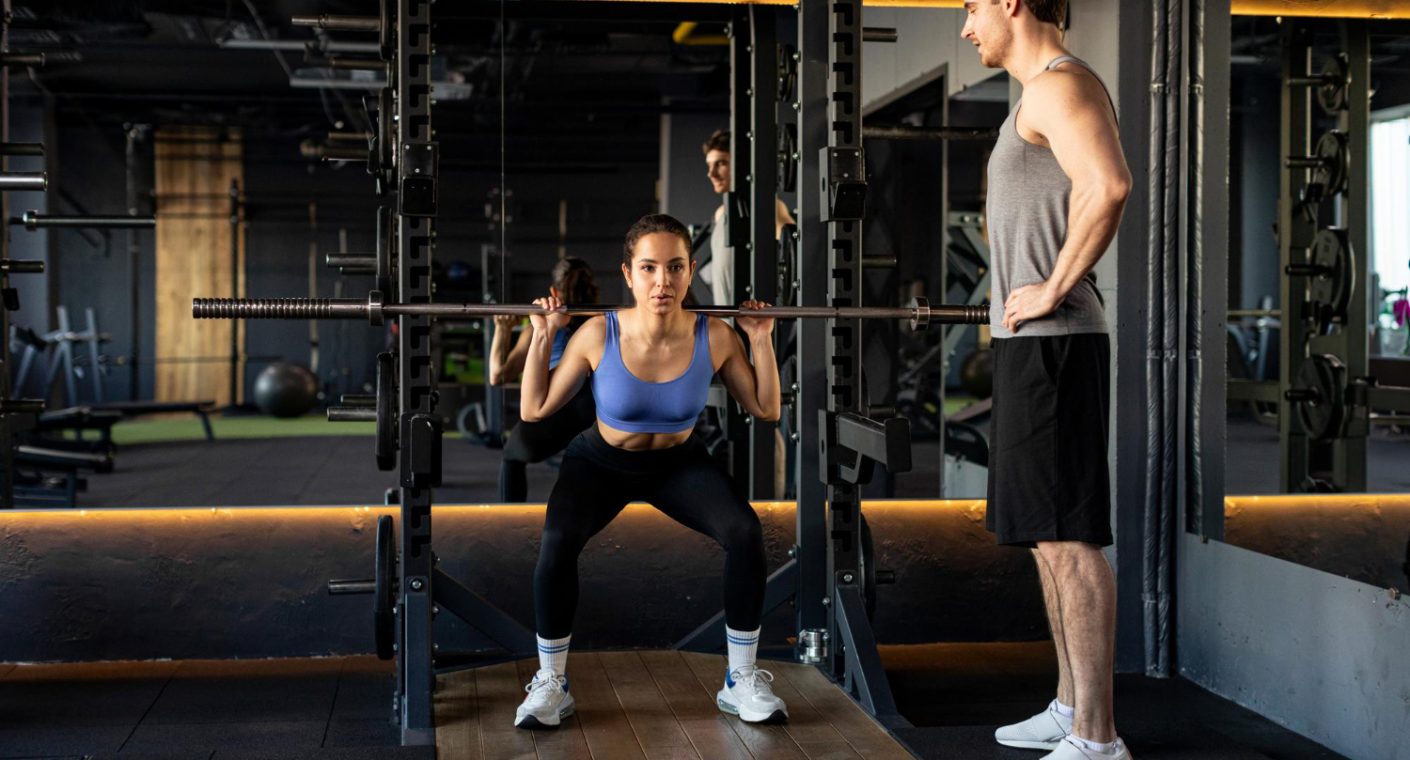
Living in a condo makes exercise convenient, but the fitness room may not have everything you would find in a large commercial gym. Your building might offer a few dumbbells, one adjustable bench, a cable station, cardio machines, and a small open area. Fortunately, limited equipment does not have to mean limited progress. With intelligent programming, a condo gym personal trainer can turn a simple fitness room into an effective space for building strength, improving conditioning, supporting weight-management goals, and developing better overall fitness.
At Triat Fitness, we focus on helping clients use the space and equipment already available to them. A successful program does not depend on having dozens of machines. It depends on choosing effective exercises, improving technique, progressing workouts gradually, and staying consistent. A condo gym personal trainer can adjust resistance, repetitions, tempo, movement variations, and workout structure to keep training challenging even when the equipment selection is relatively small.
Why Limited Equipment Does Not Mean Limited Results
A condo gym personal trainer understands that fitness results come from how exercises are performed and progressed, not from the number of machines surrounding you. Strength develops when muscles receive an appropriate challenge consistently over time. Conditioning improves when training volume, effort, and recovery are managed properly. Mobility improves through controlled movement and regular practice. All of these goals can be addressed effectively with basic dumbbells, cables, resistance bands, benches, cardio equipment, and bodyweight exercises.
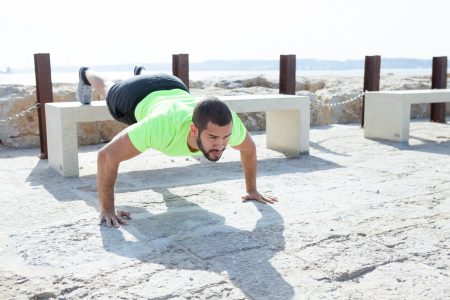
A condo gym personal trainer can also make ordinary equipment surprisingly versatile. Dumbbells can be used for squats, lunges, Romanian deadlifts, rows, presses, carries, and core exercises. A bench can support step-ups, split squats, hip thrusts, incline push-ups, and supported rows. A cable station can train pushing, pulling, rotation, arms, shoulders, and the core. Instead of focusing on what the condo gym is missing, a skilled trainer focuses on everything the available equipment can do.
Programming Matters More Than Having More Machines
A condo gym personal trainer builds the program around fundamental movement patterns such as squatting, hinging, pushing, pulling, stepping, carrying, and core stabilization. These patterns can be trained in many different ways, which means one exercise can easily be replaced with another when equipment is unavailable. By concentrating on movement quality and progression instead of specific machines, clients can continue developing strength even in a compact fitness room.
How A Personal Trainer Assesses Your Condo Gym
Before building your program, a condo gym personal trainer should first understand both you and your training environment. The trainer may review the available weights, benches, machines, cables, cardio equipment, resistance bands, mats, and open floor space. They may also consider how busy the room becomes at certain times and whether your building has rules related to personal trainers, noise, equipment movement, or use of common fitness areas.
A condo gym personal trainer should then combine this information with your personal goals, exercise experience, schedule, injuries, movement limitations, and current fitness level. Someone who wants to build strength may need a different workout structure from someone focused on general fitness or improved mobility. This personalized assessment makes the program much more useful because the trainer designs workouts around your actual circumstances instead of giving you a generic routine created for a completely different gym.
The First Few Sessions Establish Your Starting Point
A condo gym personal trainer may initially observe how you squat, hinge, push, pull, step, balance, and stabilize your core. The goal is not to make your first session as difficult as possible. The trainer is learning how you move, which exercises suit you, and where modifications may be useful. Establishing this baseline makes it easier to track progress and safely increase difficulty over the following weeks.
How Trainers Make Limited Weights More Challenging
A condo gym personal trainer often works with dumbbells that do not go as heavy as those found in a commercial strength facility. However, increasing weight is only one way to make an exercise harder. Trainers can increase repetitions, improve range of motion, reduce rest periods, introduce pauses, change exercise order, or slow down part of the movement. These strategies allow relatively light weights to remain challenging as your strength improves.
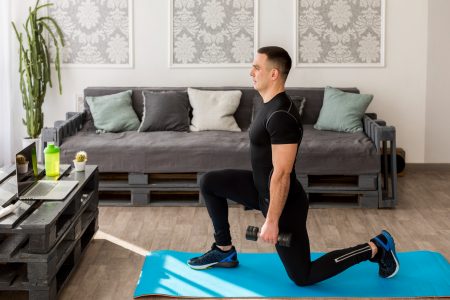
Trainers can also use more single-arm and single-leg movements. Split squats, step-ups, single-leg Romanian deadlifts, one-arm rows, one-arm presses, and suitcase carries require stability and control while placing greater demand on one side of the body at a time. This makes limited equipment much more useful. Instead of immediately needing heavier dumbbells, you can progress to a more challenging exercise variation that uses the available resistance effectively.
Tempo, Pauses, And Unilateral Training Create Progress
A condo gym personal trainer might ask you to lower into a squat for three seconds, pause briefly at the bottom, and then stand with control. The weight has not changed, but the exercise becomes significantly more demanding. Similar techniques can be applied to presses, rows, lunges, and other movements. Single-limb exercises provide another progression option because one leg or arm performs more of the work while your core also has to stabilize the body.
How Trainers Get More From Small Condo Gyms
A condo gym personal trainer needs to be flexible because shared gyms are unpredictable. The bench you planned to use might be occupied, another resident might be using the cable station, or the cardio machine you wanted could be unavailable. Instead of allowing those situations to interrupt the workout, a trainer prepares alternative exercises that train the same movement pattern and muscles.
A condo gym personal trainer also helps reduce wasted time. Rather than walking around the room deciding what to do next, you follow an organized session with planned alternatives. This can make a 45-minute or 60-minute workout much more productive, especially during busy condo gym hours.
Some useful strategies include:
- Using single-leg exercises when dumbbells are too light
- Slowing repetitions to increase muscular effort
- Adding pauses at challenging points of an exercise
- Pairing exercises into efficient supersets
- Using resistance bands when cable stations are unavailable
- Replacing machine exercises with dumbbell alternatives
- Using benches for step-ups, presses, rows, and split squats
- Adjusting repetitions when heavier weights are unavailable
- Creating full-body circuits during busy periods
- Tracking performance so progression continues from week to week
Building Strength And Supporting Weight-Management Goals
A condo gym personal trainer can build a strength program around progressive overload even when equipment choices are limited. Progressive overload simply means gradually increasing the challenge your body experiences. Adding weight is one option, but you can also perform additional repetitions, improve technique, increase range of motion, progress to a harder variation, or complete the same amount of work more efficiently. These methods provide multiple ways to continue progressing without constantly requiring new machines.
A condo gym personal trainer can also combine resistance training with cardio, walking, and other regular activity when weight management or overall conditioning is part of the goal. The Government of Canada’s Physical Activity Tips For Adults (18 To 64 Years) encourages adults to accumulate regular physical activity and include activities that strengthen muscles and bones. Having a fitness room inside your building can make regular activity easier to fit into everyday life because it removes travel time and gives you convenient access to exercise.
Strength Training Does Not Require A Commercial Gym
A condo gym personal trainer can create productive strength workouts using a relatively small collection of equipment. What matters is whether the resistance and exercise variation provide enough challenge for your current ability. When your performance is tracked consistently, your trainer can identify when it is time to add repetitions, increase resistance, change an exercise, or introduce a more advanced variation.
Form, Safety, And Exercise Modifications Matter
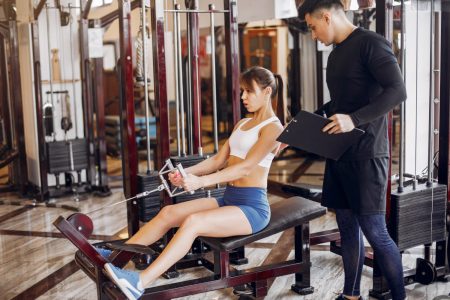
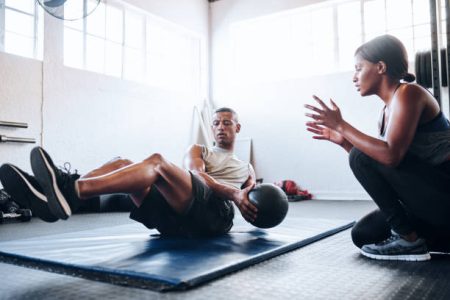
A condo gym personal trainer provides something equipment alone cannot offer: real-time coaching. Dumbbells, cables, and machines are useful only when exercises are performed appropriately for the individual. A trainer can help improve squat mechanics, hip hinging, shoulder positioning, balance, breathing, and core control. They can also identify when an exercise should be simplified or replaced because it does not suit your mobility, comfort, or current training level.
A condo gym personal trainer should also understand that fitness programs need to respect individual health considerations. The Government of Canada’s Safe Practices For Physical Activity notes that people with certain medical conditions, previous injuries, dizziness, or other concerns may need guidance from a healthcare provider when starting new activities. Professional personal training should complement appropriate medical advice rather than replace it, particularly when health conditions or previous injuries could affect exercise selection.
Real-Time Feedback Helps Build Better Movement Habits
A condo gym personal trainer can correct technique as you exercise instead of allowing the same mistake to continue for weeks. Small adjustments to foot position, posture, range of motion, or movement speed can improve how an exercise feels and how confidently you perform it. Over time, these lessons can also make you more capable of completing independent workouts between coached sessions.
Staying Consistent When The Condo Gym Is Busy
A condo gym personal trainer plans sessions so they do not depend on several popular machines being available at exactly the right time. One part of the gym can often support an entire training block. For example, dumbbells and a small amount of floor space can be used for lower-body exercises, upper-body exercises, core work, and conditioning. This reduces waiting and makes your session easier to complete during busy morning or evening periods.
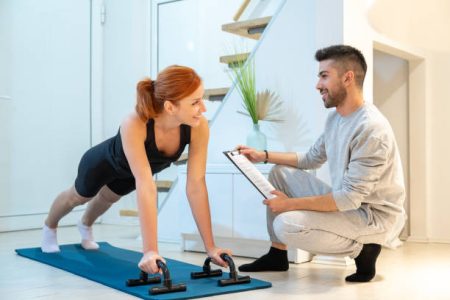
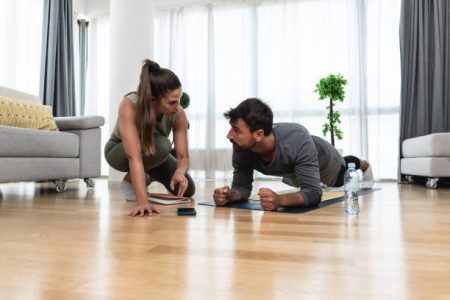
A condo gym personal trainer can also adapt when your usual fitness room is unavailable. Some exercises may be completed safely inside your home using bodyweight, resistance bands, or compact equipment. Triat Fitness can support this flexibility through 1-on-1 In-Home Personal Training, while Partner In-Home Training (2-on-1) can provide a convenient option for couples, friends, or family members who want to train together. Small Group Personal Training can also suit people who prefer greater social motivation and accountability.
Smart Substitutions Keep The Training Goal The Same
A condo gym personal trainer does not substitute exercises randomly. If the planned cable row is unavailable, another pulling movement can take its place. If a bench is occupied, a standing or floor-based exercise may provide a suitable alternative. Good substitutions preserve the purpose of the workout so your progress does not depend on whether a particular machine happens to be free.
Why Choose Triat Fitness
Triat Fitness understands that a condo gym personal trainer needs to be creative, adaptable, and organized. We help clients use the equipment and space they already have instead of making them feel that a small gym is inadequate. Sessions can incorporate dumbbells, cables, benches, bodyweight movements, bands, and cardio equipment while still following a structured progression based on the client’s goals and fitness level.
Triat Fitness also provides flexible coaching options for different lifestyles. 1-on-1 In-Home Personal Training offers personalized attention and private coaching. Partner In-Home Training (2-on-1) allows two people to share the experience while still receiving professional guidance. Small Group Personal Training provides structured coaching with added group motivation. The right format depends on your goals, schedule, preferred environment, and the type of accountability that helps you stay consistent.
Coaching That Adapts To Your Environment
Triat Fitness builds programs around real-life training spaces. If your condo gym has lighter weights, we can increase difficulty through exercise selection and programming. If equipment is occupied, we can make substitutions. If the room is small, we can organize exercises efficiently. A good training plan should adapt to your environment instead of making your environment feel like an obstacle.
Your Condo Gym May Be More Capable Than You Think
A condo gym personal trainer can turn a limited fitness room into an effective training space through thoughtful exercise selection, progressive overload, unilateral movements, controlled tempo, smart substitutions, and efficient workout structure. You do not need an endless collection of machines to build strength, improve conditioning, increase mobility, or feel more confident. You need a program that matches your current ability and gives you a clear path forward.
Triat Fitness helps clients get more from their available space through professional coaching and flexible services including 1-on-1 In-Home Personal Training, Partner In-Home Training (2-on-1), and Small Group Personal Training. If you have been wondering whether your building’s fitness room has enough equipment to support your goals, working with a condo gym personal trainer can show you how much progress is possible with a smaller space and smarter programming.
Frequently Asked Questions
A condo gym personal trainer can help turn a basic fitness room into a structured training environment by selecting effective exercises, providing coaching, and adapting workouts when equipment is unavailable. The most important factor is not how large the gym is, but how effectively the available equipment is used.
When comparing trainers, look for someone who understands exercise substitutions, progression, limited-space training, and individual modifications. These qualities help ensure that your condo gym program continues to evolve instead of becoming repetitive.
- What Does A Condo Gym Personal Trainer Do?
A trainer creates personalized workouts, teaches correct form, adapts exercises to the available equipment, and tracks your progress over time. - Can A Condo Gym Personal Trainer Build Strength With Light Weights?
Yes. A trainer can use slower tempo, pauses, additional repetitions, unilateral movements, and more difficult exercise variations to make lighter weights challenging. - Do I Need A Large Fitness Room To Work With A Condo Gym Personal Trainer?
No. Effective workouts can be created with dumbbells, resistance bands, a bench, cables, bodyweight exercises, and a modest amount of open space. - Can A Condo Gym Personal Trainer Help With Weight-Management Goals?
Yes. Personalized resistance training can be combined with appropriate conditioning, regular activity, and sustainable lifestyle habits to support broader weight-management goals. - What If Equipment Is Busy During A Condo Gym Personal Trainer Session?
Your trainer can reorganize the workout, substitute another movement, or use dumbbells, bands, or bodyweight exercises so your session continues efficiently. - Can Two People Work With A Condo Gym Personal Trainer Together?
Yes. Partner In-Home Training (2-on-1) can be a practical option for couples, friends, or family members who want professional guidance while training together. - Why Choose Triat Fitness As A Condo Gym Personal Trainer?
Triat Fitness provides personalized coaching, adaptable programming, and flexible service options designed to help clients make effective use of limited condo gym equipment.