At home dumbbell workouts are one of the best ways for beginners to start building strength because they remove the biggest barriers to consistency. You do not have to commute, wait for equipment, or feel intimidated in a crowded gym. With a pair of dumbbells and a simple plan, you can improve posture, build muscle, support fat loss goals, and feel stronger in everyday life. The key is choosing at home dumbbell workouts that are safe, repeatable, and progressive, not random routines that leave you sore and unsure what to do next.
At Triat Fitness, we coach beginners every week using practical training systems that work in real homes and condo gyms. Some clients prefer Small Group Personal Training for motivation and affordability, others choose 1-on-1 In-Home Personal Training for fully customized coaching, and many love Partner In-Home Training (2-on-1) because training with a friend makes consistency easier. No matter which option you choose, the most effective at home dumbbell workouts follow the same foundation: master the basics, train with great form, and progress gradually.
Why At Home Dumbbell Workouts Work So Well For Beginners
At home dumbbell workouts work because they combine simplicity with effectiveness. Dumbbells let you train every major muscle group using movement patterns that matter in real life, like squatting, hinging, pushing, pulling, and carrying. As a beginner, you do not need dozens of exercises. You need a small list of movements that you can practice, improve, and progress. When your plan is simple, you are more likely to follow it, and consistency is what makes at home dumbbell workouts produce results.
At home dumbbell workouts also help beginners build confidence quickly. You can start with light weights, focus on control, and increase challenge only when your form is solid. This reduces the risk of doing too much too soon. Canada’s public health guidance encourages adults to include regular weekly activity and add muscle strengthening activities at least two days per week. At home dumbbell workouts make it easier to meet that goal because they fit into your schedule without needing a gym routine you might not maintain.
How Dumbbells Support Full Body Progress
At home dumbbell workouts are powerful because one tool can train your legs, glutes, back, chest, shoulders, arms, and core. A goblet squat trains the lower body and trunk. A Romanian deadlift trains the hamstrings and glutes. Rows strengthen the upper back. Presses strengthen the chest and shoulders. Carries build grip and core stability. When a beginner repeats these patterns consistently, they develop balanced strength and better movement quality.
At home dumbbell workouts also reveal and fix small imbalances. Many beginners have one side that is slightly weaker or less coordinated. Dumbbells train each side more independently than machines, so you build stability and control over time. This is one reason at home dumbbell workouts often improve posture and confidence faster than random cardio-only routines.
What Beginners Need To Know Before Starting At Home Dumbbell Workouts
The goal of at home dumbbell workouts is not to destroy yourself. The goal is to build a habit, learn good form, and create steady progress. Beginners often quit because they start with workouts that are too hard, get extremely sore, and then avoid training for a week or two. Mild soreness is normal when you are new, but extreme soreness is usually a sign that you did too much too soon or your technique needs work. At home dumbbell workouts should leave you feeling challenged but capable of training again in a day or two.
You also need a weekly plan you can repeat. Most beginners do best with at home dumbbell workouts three days per week on non-consecutive days. That gives your muscles time to recover and gives you time to practice technique without rushing. Daily movement matters too. If you walk on the days you do not lift, you support recovery and build overall fitness. This balance is how at home dumbbell workouts become a sustainable routine instead of a short burst of effort.
How To Warm Up And Reduce Injury Risk
A warm-up should prepare your body, not exhaust you. For at home dumbbell workouts, start with 5 to 8 minutes of easy movement like marching in place, hip hinges, bodyweight squats to a chair, arm circles, and gentle lunges. Then do one lighter practice set of your first two exercises using very light dumbbells or bodyweight. This teaches your joints and muscles what is coming next.
Hydration supports performance and recovery as well. Canada’s Food Guide notes that water is the drink of choice for regular exercise and recommends drinking water before, during, and after physical activity. When beginners are hydrated, workouts feel smoother, and recovery often improves, which makes it easier to stay consistent with at home dumbbell workouts.
Setting Up Your Space And Choosing The Right Dumbbells
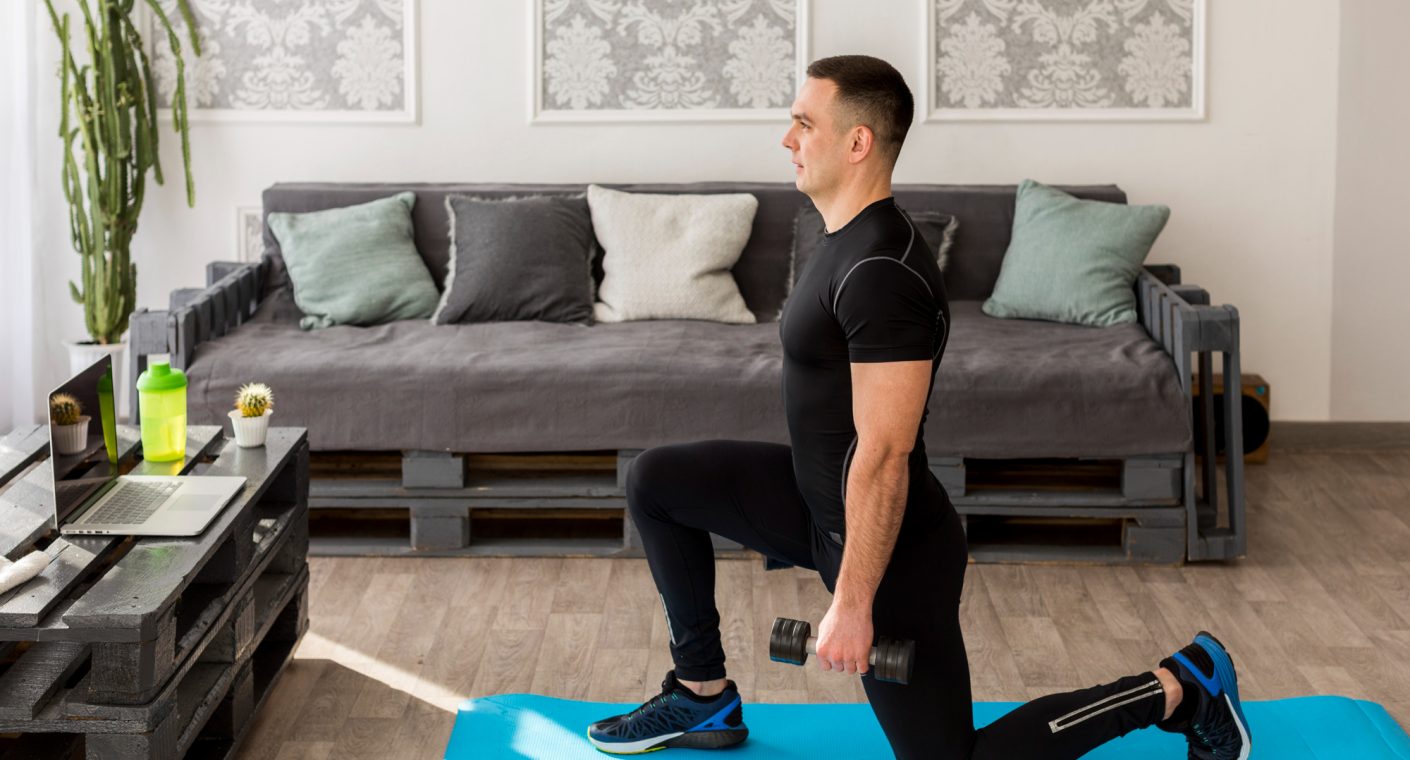
At home dumbbell workouts do not require a large space. You need enough room to squat, hinge, and press without hitting furniture. A mat helps for floor exercises, and a sturdy chair can support movements like step-ups or assisted rows. If your space is limited, you can still train effectively by choosing exercises that stay in one spot and using controlled tempos. The best at home dumbbell workouts are the ones that fit your environment, not the ones that look impressive.
For dumbbell selection, beginners usually do well with one lighter pair and one moderate pair, or adjustable dumbbells. A simple guideline is to pick a weight that allows 8 to 12 reps with good form while the last two reps feel challenging but controlled. If your form breaks down early, the weight is too heavy. If you can do 20 reps easily, the weight is likely too light for strength progress. At home dumbbell workouts become more effective when you can gradually increase weight or reps over time.
How To Pick Weights For Different Exercises
At home dumbbell workouts often require different weights for different movements. You might use heavier dumbbells for squats and deadlift variations, and lighter dumbbells for overhead presses and lateral raises. That is normal. Beginners sometimes assume the same dumbbell should work for every exercise, but different muscle groups have different strength levels.
If you only have one pair of dumbbells, you can still make at home dumbbell workouts challenging by slowing down the lowering phase, adding pauses, increasing reps, or doing unilateral movements like split squats and one-arm presses. These methods increase effort without needing heavier equipment right away.
The Five Movement Patterns That Build Better At Home Dumbbell Workouts
The most effective at home dumbbell workouts are built around five patterns: squat, hinge, push, pull, and carry. These patterns train the whole body and build functional strength. When you focus on these patterns, you stop chasing random exercises and start training in a way that makes daily life easier. This approach is also easy to progress because you can improve reps, load, range of motion, or control over time.
Beginners should aim to master a few exercises in each pattern and repeat them for 6 to 8 weeks. At home dumbbell workouts become more effective when you practice the same movements consistently. Variety can come later. At the start, repetition builds skill, confidence, and strength.
Squat And Hinge Exercises For Lower Body Strength
At home dumbbell workouts should include a squat pattern like goblet squats and a hinge pattern like dumbbell Romanian deadlifts. Goblet squats build quads, glutes, and core strength while teaching upright posture. Romanian deadlifts train the hamstrings and glutes and build strong hips, which supports posture and reduces strain during daily lifting.
Split squats and reverse lunges are also excellent because they train one leg at a time and improve stability. Beginners who include these consistently often feel stronger and more balanced within a few weeks. These are foundational choices that make at home dumbbell workouts feel productive and structured.
Push, Pull, And Carry For Upper Body And Core Stability
At home dumbbell workouts should include a push movement like a dumbbell floor press and a pull movement like one-arm dumbbell rows. Floor presses are beginner-friendly because the floor limits range of motion and can feel more comfortable on the shoulders. Rows build the upper back, which supports posture and helps keep shoulders healthy.
Carries are a simple way to train core stability, grip strength, and posture. Farmer carries can be done in a hallway, a living room, or even by marching in place. When beginners add carries, at home dumbbell workouts feel more athletic and often improve posture quickly.
A Beginner Weekly Plan Using At Home Dumbbell Workouts
A simple three-day plan is often the best starting point for at home dumbbell workouts. Train on Monday, Wednesday, and Friday, or any three non-consecutive days. Each session should feel manageable, with controlled reps and enough rest to maintain good form. Beginners should stop most sets with one or two reps left in the tank. This keeps technique clean and supports recovery so you can keep doing at home dumbbell workouts week after week.
If you want guidance and accountability, many Triat Fitness clients use Small Group Personal Training as their main weekly structure, then add one short at home dumbbell workouts session on a busy week. Others choose 1-on-1 In-Home Personal Training to learn form quickly and build a plan around their space. Partner In-Home Training (2-on-1) can also make a three-day routine easier to stick to because shared consistency improves follow-through.
Workout A: Full Body Strength Foundation
For Workout A in your at home dumbbell workouts plan, do goblet squats, dumbbell Romanian deadlifts, dumbbell floor press, one-arm dumbbell rows, and farmer carries. Use 2 to 3 sets of 8 to 12 reps for the first four exercises. For carries, do 2 to 3 rounds of 20 to 40 seconds. Rest 60 to 90 seconds between sets and focus on slow, controlled reps.
This workout covers all five movement patterns and builds a strong base. Beginners often see quick progress when they repeat this workout consistently, because technique improves and weights become more manageable. At home dumbbell workouts like this create measurable progress without complexity.
Quick Finishers To Add After At Home Dumbbell Workouts
Here are optional finishers you can add after your main at home dumbbell workouts. Choose one and keep it short, around 5 to 8 minutes:
- Farmer carry march in place: 30 seconds on, 30 seconds off, repeat 5 times
- Dumbbell step-ups: 10 reps per side, repeat for 3 rounds
- Goblet squat hold: 20 seconds, then 8 squats, repeat for 4 rounds
- Dumbbell hinge plus row combo: 8 hinges, 8 rows, repeat for 4 rounds
- Light dumbbell presses: 10 reps every minute for 6 minutes
Finishers should help you build conditioning without turning the workout into exhaustion. At home dumbbell workouts work best when you can recover and repeat them consistently.
How To Progress At Home Dumbbell Workouts Without Burning Out
Progress is what makes at home dumbbell workouts effective, but it should be gradual. The simplest method is to add reps first. Start at 8 reps per set and work toward 12 reps with perfect form. Once you reach 12 reps comfortably, increase the dumbbell weight slightly and return to 8 reps. This keeps the challenge rising while protecting technique. Beginners who use this method often progress steadily without feeling overwhelmed by at home dumbbell workouts.
Another progression tool is tempo. Slow down the lowering portion of the rep to three seconds, add a one-second pause, then lift smoothly. This increases control and time under tension, which is excellent for beginners. At home dumbbell workouts become more challenging without needing heavier weights, and your form improves faster because you are moving with intent.
How To Track Progress Like A Coach
Write down your exercises, sets, reps, and weights after every session. This turns at home dumbbell workouts into a structured program instead of a vague habit. You should see small improvements over time such as better technique, more reps, slightly heavier weights, or shorter rest periods. Those small improvements keep motivation high because they prove your work is doing something.
If tracking feels confusing, coaching can help you simplify it. Triat Fitness often uses straightforward tracking inside Small Group Personal Training so beginners can see progress clearly. When you can measure progress, at home dumbbell workouts become easier to stick to because results feel tangible.
Common Mistakes With At Home Dumbbell Workouts And How To Fix Them
The most common mistake in at home dumbbell workouts is going too heavy too soon. Beginners often chase heavier weights before their technique is stable. That can lead to poor movement patterns and discomfort that makes consistency harder. A better approach is to prioritize form, control, and consistency, then let strength build naturally. Good form is the fastest path to long-term progress in at home dumbbell workouts.
Another common mistake is program hopping. Many beginners try a new routine every week, which makes progress hard to track and movement skills harder to learn. At home dumbbell workouts should repeat the same core movements for 6 to 8 weeks so your body adapts and your confidence grows. You can change small details like rep range or tempo, but the foundation should stay consistent.
What To Do If Something Hurts
Soreness is normal, sharp pain is not. If an exercise causes sharp pain, stop and modify. Reduce the weight, shorten the range of motion, slow down, or swap the movement for a similar pattern. For example, if overhead pressing feels uncomfortable, use a floor press or an incline press instead. At home dumbbell workouts should feel challenging but safe.
If discomfort persists, form coaching is a smart step. Many beginners benefit from 1-on-1 In-Home Personal Training because a coach can spot technique issues and adjust exercises to fit your body and space. When your form improves, at home dumbbell workouts feel better and progress becomes easier.
Why Choose Triat Fitness
Triat Fitness is built for people who want practical coaching that fits real schedules and real homes. For beginners, the biggest advantage is having a plan that is structured, scalable, and coached so at home dumbbell workouts feel simple and safe. Whether you prefer training at home, in a condo gym, or in a small group environment, Triat Fitness helps you learn the fundamentals, improve form, and progress gradually without burnout.
Triat Fitness also offers multiple formats to match your lifestyle. You can build consistency and motivation through Small Group Personal Training, get fully customized coaching through 1-on-1 In-Home Personal Training, or train with someone you trust using Partner In-Home Training (2-on-1). These options make it easier to stick with at home dumbbell workouts long enough to see real results because your program fits your schedule and budget, not the other way around.
Your Next Step To Start This Week
Pick a three-day schedule, choose simple full-body sessions, and commit to repeating them for the next four weeks. Keep weights light enough to maintain perfect form, track your reps, and add small progressions only when you feel confident. The best at home dumbbell workouts are the ones you can repeat consistently, because steady effort always beats occasional intensity.
If you want faster progress and more confidence, Triat Fitness can help you turn at home dumbbell workouts into a personalized plan with real coaching. When you remove guesswork and train with structure, results become easier to achieve and easier to maintain.
Frequently Asked Questions
- How many days a week should I do at home dumbbell workouts as a beginner?
Most beginners do best with at home dumbbell workouts three days per week on non-consecutive days. - What weight should I start with for at home dumbbell workouts?
Choose a weight that allows 8 to 12 reps with good form while the last two reps feel challenging but controlled. - Can at home dumbbell workouts help with fat loss?
Yes, at home dumbbell workouts support fat loss by building muscle and increasing weekly activity, especially when paired with daily walking. - How long should at home dumbbell workouts take?
Most at home dumbbell workouts can be effective in 30 to 45 minutes including warm-up and a short finisher. - Are at home dumbbell workouts safe if I have never lifted before?
Yes, at home dumbbell workouts are safe when you start light, focus on form, and progress gradually. - Do I need adjustable dumbbells for at home dumbbell workouts?
No, but adjustable dumbbells make it easier to progress as you get stronger with at home dumbbell workouts. - What Triat Fitness service is best to learn at home dumbbell workouts faster?
1-on-1 In-Home Personal Training is ideal for personalized form coaching, while Small Group Personal Training adds structure and accountability.