Starting a fitness routine can feel exciting and intimidating at the same time. You may want to become stronger, improve your energy, lose body fat, move more comfortably, or simply build healthier habits, but knowing where to begin can be difficult. Personal training for beginners removes much of that uncertainty by giving you a structured starting point, professional exercise guidance, and accountability while you learn the basics. Instead of walking into a gym and guessing what to do, you can follow a program designed around your current fitness level and goals.
At Triat Fitness, we believe the first month should build confidence rather than overwhelm you. Personal training for beginners is not about performing the hardest workouts possible from day one. It is about understanding your starting point, learning correct movement patterns, establishing a realistic schedule, and gradually increasing the challenge as your body adapts. Your first four weeks create the foundation for everything that follows, so the focus should be on consistency, technique, and sustainable progress.
What Happens Before Your First Personal Training Session?
Personal training for beginners usually starts with a conversation rather than an intense workout. Your trainer needs to understand your goals, previous exercise experience, current activity level, schedule, available equipment, injuries, movement concerns, and anything else that could affect your program. You might want to improve strength, manage weight, develop better mobility, prepare for an active lifestyle, or simply stop feeling unsure in the gym. The trainer uses this information to decide what your first few weeks should look like.
A good assessment also helps personal training for beginners become truly personalized. Two people who both say they want to “get fit” may need very different programs. One might work at a desk all day and have little exercise experience, while another may walk frequently but have never followed a strength program. Your trainer can observe basic movements, discuss your preferences, and establish realistic expectations. This prevents you from following a generic routine that may be too difficult, too easy, or simply unrelated to your needs.
Your Starting Point Is Not A Test
The initial assessment in personal training for beginners is not about judging how fit you are. It gives your trainer useful information for designing appropriate sessions and gives you a baseline from which future progress can be measured. You do not need to prepare for the assessment or become fitter before meeting a trainer. Showing up at your current level is exactly what allows the program to be built correctly.
Week One: Learning The Basics And Building Confidence
During week one, personal training for beginners should focus heavily on learning. Your trainer may introduce movements such as squats, hip hinges, rows, presses, step-ups, carries, and basic core exercises. The exact exercises depend on your mobility, strength, training environment, and goals. The first sessions are usually not designed to exhaust you. Instead, the trainer watches how you move, teaches technique, explains equipment, and identifies exercise variations that feel appropriate for your body.
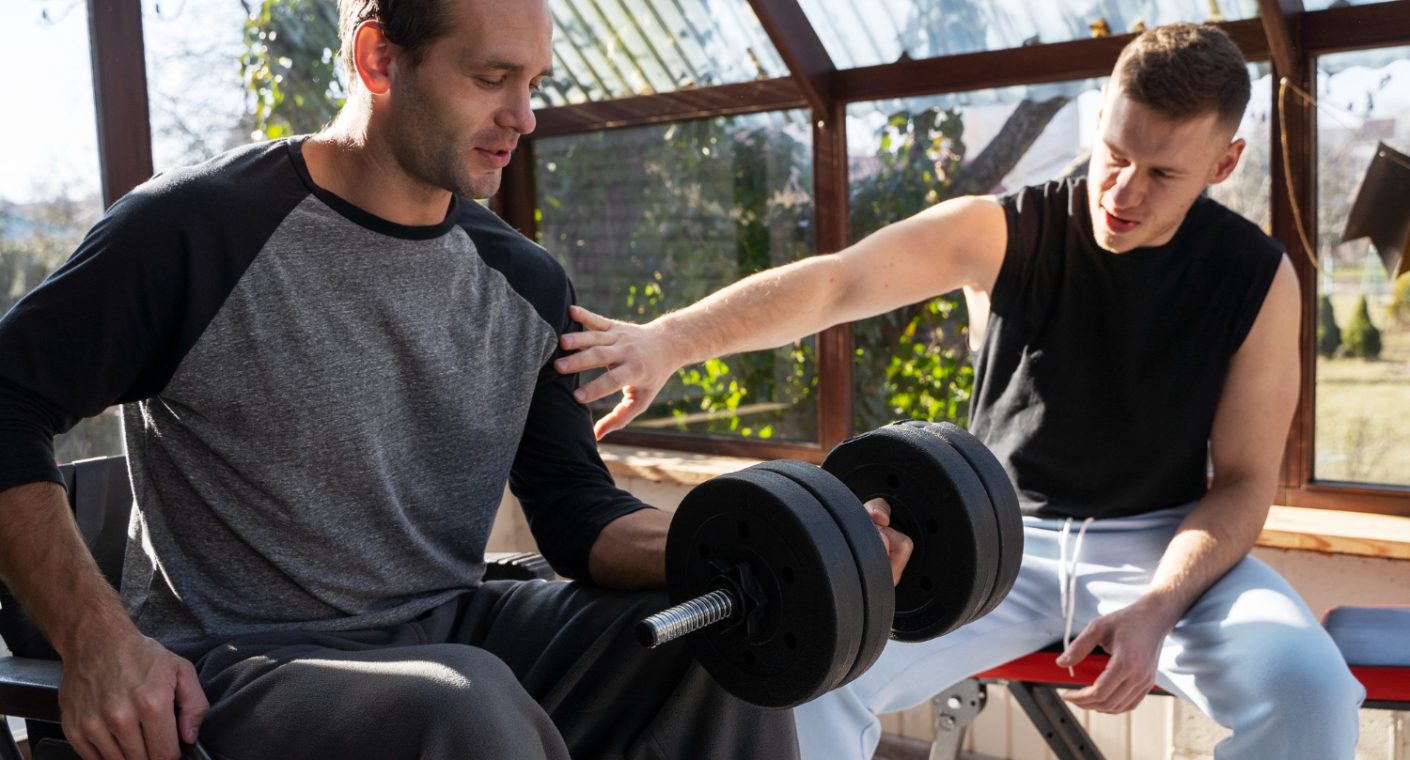
Your first week of personal training for beginners is also about learning how a structured workout feels. You may begin with a warm-up, move into strength exercises, complete some conditioning or mobility work, and finish with a gradual cool-down. Your trainer can explain how much rest to take, how challenging a set should feel, and how to recognize the difference between muscular effort and uncomfortable pain. These lessons help you become more confident instead of feeling dependent on guesswork every time you exercise.
Expect Some Soreness, But Not Complete Exhaustion
A new exercise routine can cause temporary muscle soreness because your body is adapting to unfamiliar movements. However, personal training for beginners should not leave you unable to function for several days after every workout. A responsible trainer introduces training volume gradually and monitors how you respond. Your feedback about soreness, sleep, energy, and recovery helps determine how quickly the program should progress.
Week Two: Creating Consistency And Improving Technique
By week two, personal training for beginners usually starts to feel more familiar. You recognize several exercises, understand the structure of the session, and spend less time wondering what happens next. Your trainer can begin refining technique and helping you develop greater control during movements. Instead of simply completing repetitions, you start understanding where you should feel an exercise, how to position your body, and how to breathe while working.
Consistency becomes especially important during this stage. Personal training for beginners works best when workouts become part of a predictable weekly routine. Depending on your goals and schedule, you might complete one to three coached sessions per week along with walking or other light activity between appointments. The Government of Canada recommends that adults ages 18 to 64 work toward at least 150 minutes of moderate-to-vigorous physical activity per week, along with light activity and muscle- and bone-strengthening activity.
Technique Comes Before Heavier Weights
In personal training for beginners, adding more weight is not the only sign of progress. Improved balance, better control, a smoother squat, stronger core positioning, or more confidence with a dumbbell can all represent meaningful improvement. Learning movement correctly first gives you a better foundation for increasing resistance later.
Week Three: Introducing Gradual Progression
Week three is often when personal training for beginners starts feeling more like a true training program. Once your trainer sees that you can perform foundational movements with reasonable control, they can gradually increase the challenge. This might mean adding a small amount of resistance, performing another repetition, completing an additional set, improving range of motion, or progressing to a slightly more demanding variation. The change does not need to be dramatic to be effective.
The purpose of progression in personal training for beginners is to give your body a reason to adapt without pushing faster than your technique or recovery allows. For example, you might begin with a supported squat and later progress to holding a dumbbell. A basic row might become slightly heavier, or a stationary split squat might gain additional range of motion. These gradual improvements allow you to build strength while still reinforcing the movement skills you learned during the first two weeks.
Progress Should Be Measurable But Realistic
Your trainer may track repetitions, resistance, exercise variations, session attendance, mobility, or other useful markers. Personal training for beginners becomes more motivating when you can see that something is improving, even if the change is small. Progress is rarely perfectly linear, so one difficult session does not mean the program is failing.
Week Four: Reviewing Progress And Planning The Next Phase
By week four, personal training for beginners should feel noticeably less unfamiliar. You may understand how to set up several exercises, recognize basic movement patterns, and feel more confident asking questions about your program. Some clients notice improvements in strength, energy, movement quality, or workout endurance within the first month. Other changes may require more time, particularly goals involving substantial muscle gain, fat loss, or major improvements in conditioning.
At the end of the first month, your trainer can review what has worked and what should change. Personal training for beginners should evolve based on your actual response rather than following a rigid template. Perhaps you are recovering well and can increase training volume. Maybe a particular exercise does not suit you and should be replaced. Your schedule may also show whether your original plan was realistic. The next phase should build on what you learned rather than completely changing everything just when you are beginning to feel comfortable.
Your First Month Creates A Foundation
The biggest success of your first month may simply be that exercise has started to feel normal. Personal training for beginners should help turn uncertainty into familiarity. Once you understand the routine, movement patterns, and expectations, your trainer can continue building strength and fitness from a much stronger foundation.
What A Beginner Workout May Include
Personal training for beginners often focuses on full-body training because it allows you to practice important movements regularly without requiring a complicated weekly split. A session might include a warm-up, one lower-body movement, a hip-hinge exercise, an upper-body push, an upper-body pull, core work, and a short conditioning component. Your trainer can modify these categories depending on your needs, limitations, and available equipment.
You also do not need an advanced gym to make personal training for beginners effective. Triat Fitness can build sessions around a home, condo gym, or suitable training space. Services such as 1-on-1 In-Home Personal Training make it possible to receive direct coaching without travelling to a commercial facility. If you prefer training alongside someone you know, Partner In-Home Training (2-on-1) can provide shared accountability, while Small Group Personal Training can add a supportive social element.
Your Program Should Fit Your Environment
A strong beginner program uses the resources available rather than treating limited equipment as a problem. Dumbbells, resistance bands, benches, cable machines, and bodyweight movements can provide many training options. Personal training for beginners is about learning how to use those tools effectively and safely, not collecting as much equipment as possible.
What You Can Expect During Your First Month
Personal training for beginners becomes much easier when you know what is normal during the first few weeks. You may feel excited after one session and tired before another. Certain movements may click immediately while others take several sessions to understand. Your trainer should adjust the program based on how you respond rather than expecting every workout to feel exactly the same.
Your first month should also help you develop habits beyond the workout itself. Personal training for beginners is more effective when training is supported by regular activity, appropriate hydration, balanced eating, and sufficient recovery. Canada’s Food Guide explains that eating habits and physical activity can work together to support health and wellbeing.
During the first month, you can generally expect:
- An initial discussion about your goals and exercise history
- Basic movement and fitness assessments
- Instruction on exercise form and equipment
- Full-body strength training at an appropriate level
- Gradual increases in resistance or repetitions
- Adjustments based on soreness and recovery
- Guidance for activity between coached sessions
- Regular feedback about your technique
- Progress tracking from week to week
- Greater confidence as exercises become familiar
How Often Should A Beginner Work With A Personal Trainer?
The ideal frequency for personal training for beginners depends on your schedule, goals, budget, recovery, and how independently you can exercise between sessions. Some beginners start with one coached session per week and repeat assigned exercises independently. Others prefer two or three sessions because they want more direct guidance and accountability during the learning phase. There is no single schedule that is right for everyone.
What matters most is whether personal training for beginners fits realistically into your life. Scheduling five workouts when you can consistently complete only two creates unnecessary frustration. A trainer can help identify a manageable starting point and gradually add activity when appropriate. Building consistency with two weekly sessions is usually more useful than repeatedly planning an unrealistic schedule and feeling as though you have failed whenever life gets busy.
Start With A Schedule You Can Maintain
When starting personal training for beginners, think beyond the first enthusiastic week. Ask yourself what training schedule you could still follow during a demanding workweek or a busy family period. Building around that realistic number gives your routine a better chance of lasting long enough to produce meaningful results.
Common Beginner Mistakes A Trainer Can Help Prevent
One of the biggest mistakes in personal training for beginners is trying to progress too quickly. New clients sometimes believe every workout must be extremely difficult to produce results. They add too much resistance, complete excessive cardio, train too frequently, or ignore recovery because they want rapid progress. This approach can quickly make exercise feel exhausting and difficult to sustain. A trainer can control progression so each week remains challenging without turning fitness into punishment.
Another common problem is frequently changing workouts. Personal training for beginners benefits from repeating foundational exercises because repetition allows technique and strength to improve. Constantly replacing exercises may feel exciting, but it can make progress difficult to measure. Your trainer may include enough variation to keep sessions interesting while maintaining core movements long enough for you to become better at them.
Avoid Comparing Your Starting Point With Someone Else’s Progress
Everyone enters fitness with a different background. Someone beside you may have exercised for years while you are completing your third session. Personal training for beginners should focus on your own baseline and progress. Comparing today’s performance with your previous performance is much more useful than comparing your weights, appearance, or fitness level with another person.
How Recovery And Nutrition Support Your First Month
Recovery plays an important role in personal training for beginners because your body is adapting to new physical demands. Sleep, hydration, appropriate rest between harder sessions, and honest communication about soreness all help your trainer make good programming decisions. If you arrive consistently exhausted or unusually sore, the answer may not be to push harder. Your training plan may need adjustment so that effort and recovery remain balanced.
Nutrition can also influence how you feel during personal training for beginners. You do not need to begin an extreme diet simply because you started exercising. Building balanced, sustainable eating habits is usually more practical than trying to change everything at once. Canada’s Food Guide emphasizes nutritious foods and healthy eating habits as part of overall wellbeing. Your first month is a good opportunity to improve one or two manageable habits instead of creating so many rules that the process becomes difficult to continue.
Give Your Body Time To Adapt
Your fitness will not be transformed in four weeks, and that is completely normal. Personal training for beginners should create momentum that can continue for months. The strongest first-month outcome is often improved confidence, better exercise technique, greater consistency, and a clear understanding of what you should do next.
Why Choose Triat Fitness
Triat Fitness approaches personal training for beginners with a focus on individual needs rather than one-size-fits-all workouts. We understand that starting exercise can feel intimidating, especially if you have never worked with a trainer or have been inactive for a long time. Sessions are designed to help you learn proper movement, understand your program, build confidence, and gradually increase the challenge as you become stronger and more comfortable.
Triat Fitness also provides flexible ways to begin. 1-on-1 In-Home Personal Training offers private attention and personalized coaching in a familiar environment. Partner In-Home Training (2-on-1) allows you to begin alongside a spouse, friend, or family member, while Small Group Personal Training provides structured coaching with added group motivation. Personal training for beginners should remove unnecessary barriers, and choosing the service format that fits your personality and lifestyle can make staying consistent much easier.
Begin With Coaching That Meets You Where You Are
You do not need to become fit before contacting a personal trainer. Triat Fitness can help establish your starting point and build from there. The purpose of coaching is to guide your progress, not expect you to arrive already knowing how to exercise.
Your First Month Is About Building Momentum
Personal training for beginners should make your first month simpler, safer, and more structured. Week one introduces foundational movements, week two strengthens technique and consistency, week three adds gradual progression, and week four gives you an opportunity to review your progress and prepare for the next phase. Instead of expecting dramatic changes immediately, focus on becoming more confident, capable, and consistent with each session.
Triat Fitness can support your first month through 1-on-1 In-Home Personal Training, Partner In-Home Training (2-on-1), or Small Group Personal Training based on your goals and preferred training environment. If you have been waiting until you feel “ready” to begin, remember that personal training for beginners exists specifically to help you learn from the beginning. Starting with professional guidance can give you the structure and confidence needed to turn your first month into the foundation of a lasting fitness routine.
Frequently Asked Questions
Personal training for beginners often comes with questions about fitness level, training frequency, equipment, soreness, and what happens during the first few sessions. You do not need extensive exercise experience before working with a trainer. A good coach should adjust the program to your current ability and teach you what you need to know as you progress.
The first month is primarily a learning and foundation-building phase. Personal training for beginners becomes more effective when you communicate openly with your coach, attend sessions consistently, and give yourself enough time to develop new skills and habits.
What Happens During The First Personal Training For Beginners Session?
Your trainer will usually discuss your goals, exercise history, schedule, and current ability before introducing suitable movements and establishing a starting point.How Often Should I Do Personal Training For Beginners?
Many beginners start with one to three coached sessions per week depending on their goals, schedule, recovery, and ability to exercise independently.Is Personal Training For Beginners Suitable If I Have Never Exercised?
Yes. Personal training for beginners can be particularly useful for someone with no previous training experience because exercises can be introduced gradually with direct instruction.Will Personal Training For Beginners Make Me Very Sore?
Some temporary muscle soreness can occur when starting new exercises, but your trainer should introduce training gradually rather than trying to exhaust you at every session.Do I Need Equipment For Personal Training For Beginners?
Not necessarily. Effective beginner workouts can use bodyweight exercises, resistance bands, dumbbells, or equipment available in your home or condo gym.How Quickly Will I See Results From Personal Training For Beginners?
Progress varies between individuals. During the first month, you may notice improvements in confidence, technique, strength, consistency, or workout endurance before larger physical changes become noticeable.Why Choose Triat Fitness For Personal Training For Beginners?
Triat Fitness provides personalized coaching and flexible training options designed to help beginners learn proper technique, build strength gradually, and create a routine they can maintain.