Starting a fitness routine at home is one of the smartest decisions a beginner can make because it removes the biggest barrier: getting to the gym. With a pair of dumbbells and a simple plan, you can build strength, improve posture, boost confidence, and create the consistency you need to keep going. The key is choosing dumbbell workouts for beginners that are safe, repeatable, and progressive instead of random routines that leave you sore and unsure what to do next.
At Triat Fitness, we coach beginners every week through home-based programs and coached sessions that make training feel simple and doable. Whether you prefer Small Group Personal Training for motivation, 1-on-1 In-Home Personal Training for full customization, or Partner In-Home Training (2-on-1) for shared accountability, the same principle applies: the best dumbbell workouts for beginners focus on form first, then build intensity gradually. If you want a beginner plan you can follow for months, this guide will walk you through exactly how to do it.
Why Dumbbells Are Perfect For Beginners At Home
Dumbbells are one of the most beginner-friendly tools because they are versatile, easy to store, and allow you to train every major muscle group without complicated equipment. With dumbbell workouts for beginners, you can learn basic movement patterns like squats, hinges, presses, rows, and carries, which translate directly to better strength in daily life. Unlike machines, dumbbells require more control and coordination, which helps you develop balanced strength and better movement quality.
Dumbbell workouts for beginners also scale well. You can start with very light weights and higher reps to learn technique, then gradually increase load as you get stronger. This matters because progress is what keeps beginners motivated. When your workouts help you lift a bit more, move a bit better, or complete sets with more confidence, you stay consistent, and consistency is what drives results.
How Dumbbells Support Full Body Progress
The biggest benefit of dumbbell workouts for beginners is that you can train the whole body with a small list of exercises. Squats and lunges build legs and glutes, rows strengthen the upper back, presses build shoulders and chest, and deadlift variations train the posterior chain. When you combine these patterns into a weekly routine, you get balanced development instead of only training what feels easy.
Dumbbells also help you correct strength imbalances. One arm might be slightly weaker than the other, and dumbbells make that obvious in a safe way. Over time, dumbbell workouts for beginners can help your body feel more even, more stable, and more capable during everyday movement.
What Beginners Should Know Before Starting
Before jumping into dumbbell workouts for beginners, you should know that the goal is not to crush yourself on day one. The goal is to build a habit and learn good form. You should finish workouts feeling challenged but not destroyed. Mild soreness is normal, but extreme soreness that disrupts your week usually means you did too much too soon or your technique needs work.
It also helps to understand the bigger weekly picture. Many adults benefit from combining strength work with regular movement such as walking. Canada’s public health guidance encourages adults to be active regularly and includes muscle-strengthening activities as part of a healthy routine. If you structure dumbbell workouts for beginners two to four times per week and add light movement on off days, you build fitness without burning out.
How Often Should Beginners Do Dumbbell Workouts
Most people do best starting dumbbell workouts for beginners 3 days per week. This gives you enough frequency to practice form and build strength while leaving rest days for recovery. If you are very new or you have a busy schedule, 2 days per week can still work as long as you stay consistent for several months.
Once you feel confident, you can move to 4 days per week by splitting the workouts into upper body and lower body days. The best schedule is the one you can repeat. Dumbbell workouts for beginners only work when they become a routine.
Choosing The Right Dumbbells And Setting Up Your Space
You do not need a full home gym to do dumbbell workouts for beginners. You need a small, safe space where you can squat, hinge, and press without bumping into furniture. A yoga mat can help for floor exercises. A sturdy chair or bench can support movements like step-ups or incline presses. If you have limited space, you can still train effectively by choosing exercises that stay in one spot.
For weights, beginners often do well with one lighter pair and one moderate pair. If you are not sure where to start, choose a weight that allows you to do 8 to 12 reps with good form while still feeling like the last 2 reps are challenging. You can also use adjustable dumbbells to progress without buying multiple sets. The goal is to pick weights that make dumbbell workouts for beginners feel challenging but controlled.
Warming Up The Right Way
A warm-up should prepare your joints and muscles for the workout, not exhaust you. For dumbbell workouts for beginners, aim for 5 to 8 minutes of easy movement like marching in place, step-backs, arm circles, and hip hinges. Then do one light set of your first few exercises using bodyweight or very light dumbbells.
Hydration supports performance too. Canada’s Food Guide highlights that water is the drink of choice for regular exercise and suggests drinking water before, during, and after physical activity. This is simple, but it makes workouts feel easier and recovery smoother, especially for beginners building a new routine.
The Five Movement Patterns Every Beginner Should Learn
Most effective dumbbell workouts for beginners are built around five movement patterns: squat, hinge, push, pull, and carry. These patterns cover almost everything your body needs for strength and function. When you get better at these, your posture improves, your joints feel more stable, and everyday tasks feel easier.
Instead of learning dozens of exercises, focus on mastering a few. The best dumbbell workouts for beginners repeat key movements so you can build technique and confidence. Variety is useful later, but consistency is what gets you strong at the start.
Squat Pattern Basics
The squat pattern trains your quads, glutes, and core. For dumbbell workouts for beginners, goblet squats are often the best starting option because holding one dumbbell at your chest helps keep your torso upright. Start by squatting to a comfortable depth where you can keep your heels down and your chest tall. Over time, as mobility and control improve, depth and load can increase.
If squats feel awkward, use a chair as a target. Tap the chair lightly, then stand. This keeps form consistent while you build strength. Dumbbell workouts for beginners should feel safe and repeatable, and squat practice is one of the fastest ways to build lower body confidence.
Hinge Pattern Basics
The hinge pattern trains your hamstrings, glutes, and back. A classic hinge is the dumbbell Romanian deadlift. The goal is to push your hips back while keeping your spine long and your dumbbells close to your legs. You should feel the stretch in your hamstrings, not pain in your lower back.
For dumbbell workouts for beginners, the hinge is a game changer because it builds posterior chain strength that supports posture and reduces back strain during daily life. Start light, focus on control, and keep reps smooth.
Push Pattern Basics
Push exercises train your chest, shoulders, and triceps. Beginners can start with dumbbell floor presses because the floor limits range of motion and helps protect the shoulders. As you get stronger, you can progress to incline presses using a bench or stable surface.
Overhead pressing is also valuable, but it should be done with control. If overhead pressing feels uncomfortable, start with a neutral grip and lighter weights. Dumbbell workouts for beginners should build confidence, not force painful movement.
Pull Pattern Basics
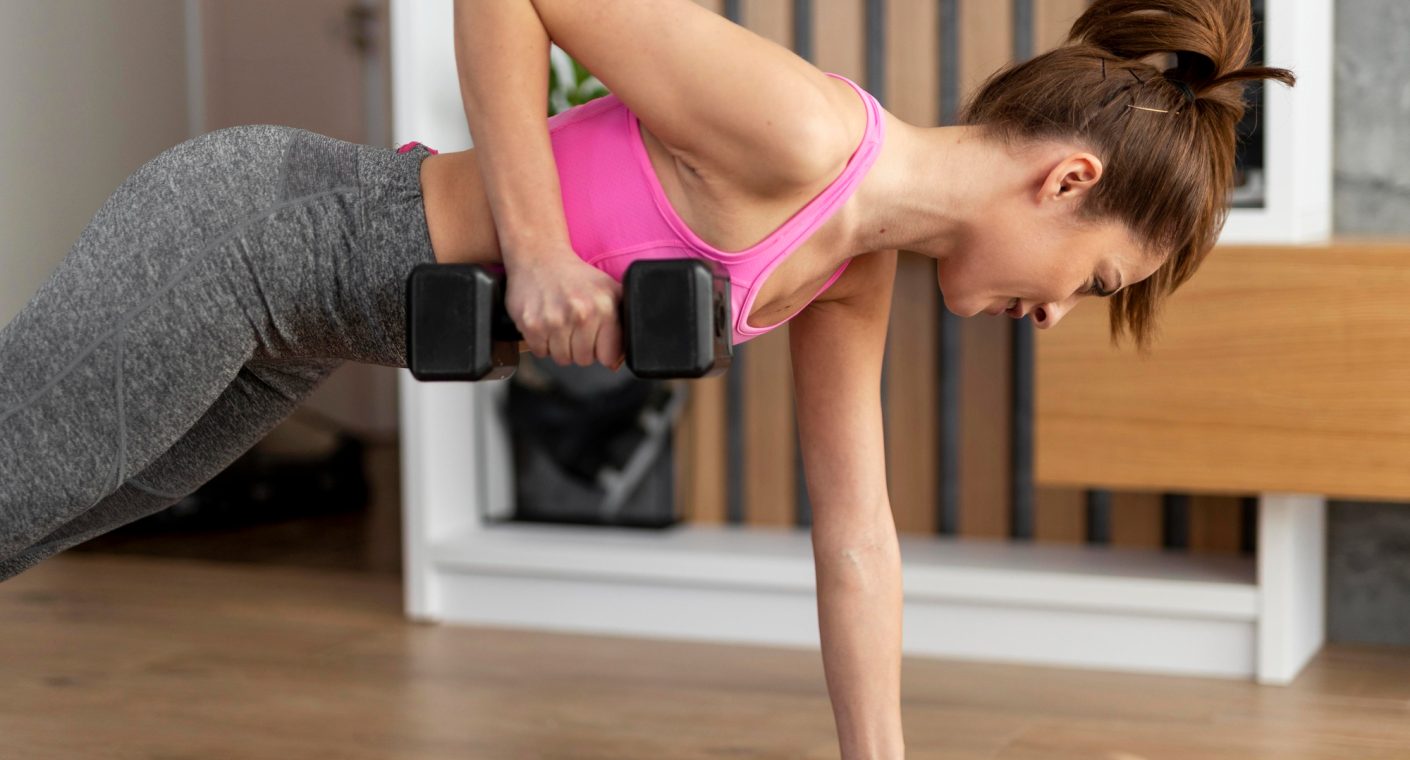
Pull exercises train the upper back, which supports posture and shoulder health. One-arm dumbbell rows are a staple in dumbbell workouts for beginners because they teach you to stabilize your core while working one side at a time. Use a chair or bench for support, keep your back flat, and pull the dumbbell toward your hip.
A strong back makes everything else easier, including pressing movements. When beginners include rows consistently, they often notice better posture and less shoulder discomfort over time.
Carry Pattern Basics
Carries are simple but powerful. Holding dumbbells and walking slowly trains grip strength, core stability, and posture. Farmer carries also teach you how to brace, which improves performance in almost every other exercise.
If you are doing dumbbell workouts for beginners at home, carries can be done in a hallway or even by marching in place while holding the weights. Start with short distances and build gradually.
Beginner Full Body Dumbbell Workout Plan
A full body plan is the simplest approach for dumbbell workouts for beginners because you train all major muscle groups multiple times per week. Below is a beginner-friendly structure you can do 3 days per week on non-consecutive days. Keep rest between sets around 60 to 90 seconds. If form breaks down, reduce weight or reps.
The goal is to leave 1 to 2 reps in the tank on most sets. That means you could do a couple more reps if you had to, but you stop before your form falls apart. This is how dumbbell workouts for beginners stay safe while still building strength.
Workout A: Strength Foundation
Do goblet squats, dumbbell Romanian deadlifts, dumbbell floor press, one-arm dumbbell row, and farmer carries. Use 2 to 3 sets of 8 to 12 reps for the first four movements, then do 2 to 3 short carry sets of 20 to 40 seconds. Focus on slow, controlled reps, especially on the lowering phase. This control is one of the fastest ways to improve form and strength.
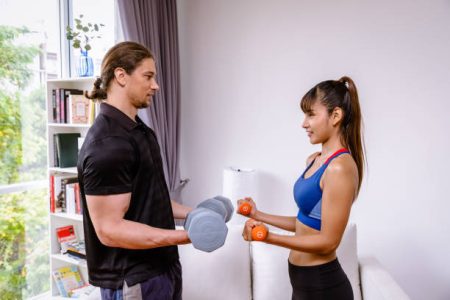
Over time, Workout A becomes your anchor session because it covers all five patterns. Dumbbell workouts for beginners work best when you keep the basics consistent and progress slowly. If you want more coaching and real-time form correction, Triat Fitness often guides beginners through this style of structure in 1-on-1 In-Home Personal Training.
Workout B: Strength And Conditioning Balance
Do reverse lunges, dumbbell hip hinge or deadlift variation, dumbbell overhead press, two-arm dumbbell row or chest-supported row if available, then finish with a short conditioning block like step-ups or marching carries. Use 2 to 3 sets of 8 to 10 reps per side for lunges, 8 to 12 reps for hinges and presses, and 10 to 12 reps for rows.
This workout builds stamina while reinforcing strength patterns. Many people find dumbbell workouts for beginners easier to maintain when one workout feels slightly more “athletic” and less repetitive. If you train with a friend, Partner In-Home Training (2-on-1) can make these workouts more consistent and more fun while still staying coached and structured.
Simple Dumbbell Workout Finishers For Beginners
Here are a few finishers you can add after your main dumbbell workouts for beginners. Pick one and keep it short, around 5 to 8 minutes:
- Farmer carry march in place: 30 seconds on, 30 seconds off, repeat 5 times
- Bodyweight squat to dumbbell press: 8 reps every minute for 6 minutes
- Step-ups holding light dumbbells: 10 reps per side, repeat for 3 rounds
- Dumbbell row plus hinge combo: 8 hinges, 8 rows, repeat for 4 rounds
- Light dumbbell goblet squat hold: 20 seconds, then 8 squats, repeat for 4 rounds
These finishers keep workouts efficient without turning them into burnout sessions. Dumbbell workouts for beginners should feel like you are building capacity, not surviving punishment.
How To Progress Without Getting Hurt
Progression is what makes dumbbell workouts for beginners effective, but it has to be gradual. The easiest progression is to add reps first. If you start at 8 reps per set, aim to reach 12 reps with perfect form before adding weight. Once you can do 12 reps comfortably, increase the dumbbell weight slightly and return to 8 reps. This keeps your body adapting without sudden jumps.
Another progression method is to slow down the lowering portion of the rep. For example, take 3 seconds to lower the dumbbell during squats, presses, or rows. This increases time under tension and builds control, which is perfect for dumbbell workouts for beginners who want to get stronger safely.
How To Track Progress Like A Coach
Write down your exercises, sets, reps, and weights each session. This simple habit makes dumbbell workouts for beginners feel structured and measurable. You should see small improvements over time such as better form, more reps, heavier weights, or shorter rest between sets.
If tracking feels confusing, coaching helps. Triat Fitness often uses simple progress tracking inside Small Group Personal Training so beginners can stay motivated while still training safely. When you can see progress on paper, it becomes easier to stay consistent.
Common Beginner Mistakes And How To Fix Them
The most common mistake in dumbbell workouts for beginners is going too heavy too soon. Heavier weights are not automatically better if form breaks down. Beginners should build movement skill first. Good form lets you progress faster long term because you avoid setbacks and nagging aches.
Another common mistake is program hopping. People do a different routine every day and wonder why they are not improving. Dumbbell workouts for beginners should repeat key movements for at least 6 to 8 weeks. This repetition is what builds strength and confidence. You can still add small variations, but the foundation should stay consistent.
What To Do If You Feel Pain
Soreness is normal, sharp pain is not. If an exercise causes sharp pain, stop and modify it. Use a lighter weight, reduce range of motion, or swap to a different movement pattern. For example, if overhead pressing hurts, do a floor press or incline press instead. Dumbbell workouts for beginners should feel challenging, not painful.
If pain persists, it is worth getting form coaching. A coach can spot small technique issues that you cannot see yourself. This is where 1-on-1 In-Home Personal Training can be a smart option because the coach can adjust exercises based on your body and your space.
Why Choose Triat Fitness
Triat Fitness is built for people who want real coaching and practical results without needing a traditional gym routine. For beginners, the biggest advantage is having a plan that is structured, scalable, and coached so you can do dumbbell workouts for beginners with confidence. Whether you prefer training at home, in a condo gym, or in a coached environment, Triat Fitness helps you learn the fundamentals and progress safely over time.
Triat Fitness also offers multiple formats to match your lifestyle. You can build consistency and motivation through Small Group Personal Training, get fully customized coaching through 1-on-1 In-Home Personal Training, or train with a friend using Partner In-Home Training (2-on-1). These options make it easier to stick with dumbbell workouts for beginners long enough to see real results, because your program fits your schedule and your budget.
Your Next Step
If you are ready to start, pick two dumbbell workouts for beginners from the plan above and commit to three sessions this week. Keep weights light enough to maintain perfect form, track your reps, and focus on consistency for the next 6 to 8 weeks. Once that routine feels normal, add small progressions like extra reps or slightly heavier dumbbells.
If you want expert eyes on your form and a plan built around your goals, Triat Fitness can help you get started with coaching that meets you where you are. A simple home-based plan, done consistently, is often the fastest path to strength and confidence.
Frequently Asked Questions
- How many days a week should I do dumbbell workouts for beginners?
Most beginners do best with dumbbell workouts for beginners 3 days per week on non-consecutive days. - What weight should I start with for dumbbell workouts for beginners?
Start with a weight that allows 8 to 12 reps with good form while still feeling challenging near the end. - Can dumbbell workouts for beginners help with weight loss?
Yes, dumbbell workouts for beginners can support fat loss by building muscle and increasing weekly activity, especially when paired with walking and nutrition habits. - Are dumbbell workouts for beginners safe if I have never lifted before?
Yes, dumbbell workouts for beginners are safe when you start light, learn form, and progress gradually. - Do I need adjustable dumbbells for dumbbell workouts for beginners?
No, but adjustable dumbbells can make progression easier as you get stronger with dumbbell workouts for beginners. - How long should a beginner dumbbell workout last?
Most dumbbell workouts for beginners can be effective in 30 to 45 minutes including warm-up and a short finisher. - What is the best Triat Fitness option to learn dumbbell workouts for beginners faster?
1-on-1 In-Home Personal Training is ideal for personalized form coaching, while Small Group Personal Training adds structure and accountability for beginners.